Proposal Follow-Up Strategies (How to Follow Up on Freelance Proposals Effectively)
Introduction
Proposal follow-up strategies are a critical component of the freelance sales process. After a proposal has been delivered, the opportunity enters a decision phase where the client evaluates the engagement, considers alternatives, and determines whether to proceed.
Many freelancers assume that once a proposal is sent, the next step is to wait for a response. In practice, this approach often leads to stalled deals and lost opportunities.
A structured proposal follow-up strategy ensures that opportunities remain active and continue progressing toward a decision.
Within the Processome operating model, proposal follow-up belongs to the → Client Pipeline System, the system responsible for managing how opportunities move from proposal to closed engagement.
When implemented correctly, freelance proposal follow-up significantly improves conversion rates and reduces pipeline stagnation.
What Is Proposal Follow-Up?
Proposal follow-up is the structured process of maintaining communication with a client after a proposal has been submitted.
The goal of following up on a proposal is not to apply pressure, but to:
- clarify questions
- maintain visibility
- address concerns
- guide the decision process
This stage occurs after:
→ Discovery Calls for Freelancers
→ Structuring Freelance Proposals
Once the proposal is delivered, the opportunity enters a decision phase. Follow-up ensures that this phase progresses rather than stalls.
The Core Problem
Many freelancers do not have a defined proposal follow-up process.
Instead, they rely on passive or inconsistent communication.
Common situations include:
- waiting for the client to respond
- sending one follow-up and stopping
- following up irregularly
- not tracking proposal status
These behaviors create operational risks.
Stalled Opportunities
Deals remain inactive in the pipeline.
Lost Deals
Clients shift priorities or choose alternatives.
Forecasting Inaccuracy
Unresolved proposals distort pipeline visibility.
Lower Conversion Rates
Opportunities fade instead of closing.
A structured proposal follow-up strategy for freelancers prevents these issues by maintaining momentum.
The Proposal Follow-Up Framework
An effective proposal follow-up framework can be structured into four key phases.
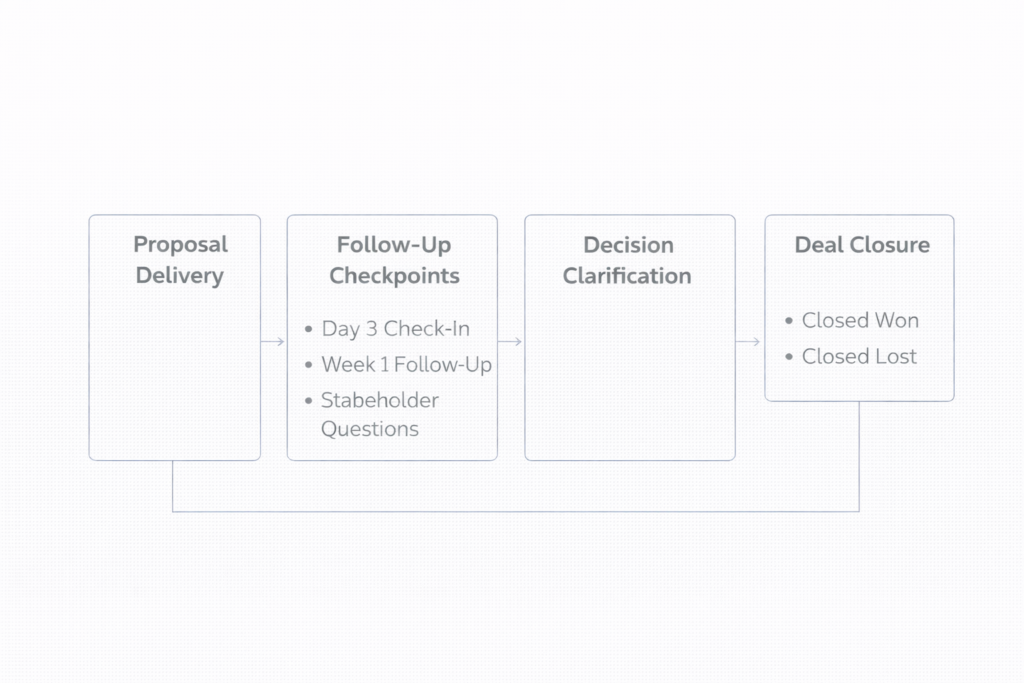
1. Proposal Delivery
Follow-up begins when the proposal is sent.
A strong delivery includes:
- confirming receipt
- summarizing key elements
- setting expectations for next steps
- clarifying decision timeline
This reduces uncertainty and creates a reference point for follow-up.
2. Follow-Up Checkpoints
A structured freelance proposal follow-up requires defined checkpoints.
Typical sequence:
- short follow-up after a few days
- check-in after one week
- additional follow-ups aligned with timeline
This ensures consistent engagement without overcommunication.
Tracking systems help manage this:
→ Deal Tracking Systems for Freelancers
3. Decision Clarification
The purpose of follow-up is to understand how the client is deciding.
Key questions:
- Has the proposal been reviewed?
- Are stakeholders aligned?
- Is additional information needed?
- Are there concerns or objections?
This stage often uncovers hidden blockers.
4. Deal Closure
Every proposal should reach a clear outcome.
Possible outcomes:
- accepted
- revised
- postponed
- rejected
Each outcome must be recorded in the pipeline.
→ Pipeline Velocity for Freelancers
→ B2B Freelance Sales Metrics
How Follow-Up Improves Proposal Conversion
A structured proposal follow-up strategy maintains deal momentum.
- proposals stay visible
- objections are addressed early
- decisions happen faster
- fewer deals are lost
This directly impacts:
→ Increase Proposal Conversion Rate as a Freelancer
Operationalizing Proposal Follow-Up
To follow up on proposals effectively, freelancers should:
- define a consistent follow-up cadence
- track every proposal in a system
- align follow-ups with client timelines
- document outcomes
Supporting systems include:
→ Deal Tracking Systems for Freelancers
→ Simple CRM Setup for Freelancers
You can manage supporting tools here:
→ Client Pipeline System Tools
Operational Impact
Structured proposal follow-up for freelancers improves:
Higher Conversion Rates
Active follow-up increases deal success.
Faster Sales Cycles
Regular communication reduces delays.
Reduced Pipeline Stagnation
Deals either progress or close out.
Better Forecast Accuracy
Pipeline reflects real deal status.
System-Level Impact Across Processome
Proposal follow-up influences:
- Client Pipeline System → deal progression
- Capacity Planning System → workload timing
- Profit Tracking System → revenue visibility
- Delivery & Operations System → onboarding readiness
Common Failure Patterns
Passive Waiting
The most common mistake.
Excessive Follow-Up
Creates pressure and damages trust.
No Decision Timeline
Leads to poorly timed follow-ups.
Missing Pipeline Updates
Reduces visibility and accuracy.
Strategic Outcome
When freelancers implement structured proposal follow-up strategies:
- more proposals convert
- deals close faster
- pipeline becomes clearer
- client relationships improve
Over time, follow-up becomes a core driver of pipeline performance.
Final Perspective
Sending a proposal is not the final step in the sales process—it is the beginning of the decision phase.
Without structured follow-up, even strong opportunities can stall or disappear.
A well-defined proposal follow-up strategy for freelancers ensures that opportunities continue progressing toward a clear outcome.
Within the Processome operating model, this strengthens the Client Pipeline System by converting proposals into confirmed client engagements.