Intro
A discovery call is often treated as a conversation.
Something informal.
Something exploratory.
But in reality, it is one of the most critical stages in your pipeline.
Because this is where:
- opportunities are evaluated
- expectations are aligned
- decisions begin to take shape
When discovery calls are unstructured, everything that follows becomes unpredictable.
Not because the opportunity is wrong.
But because it was never properly defined.
Why Discovery Calls Often Break Down
Many freelancers approach discovery calls without a clear structure.
They rely on:
- open-ended conversations
- reactive questioning
- informal exploration
This creates a false sense of progress.
The conversation feels productive.
But nothing is actually validated.
As a result:
- weak opportunities move forward
- proposals are built on assumptions
- deals stall later in the pipeline
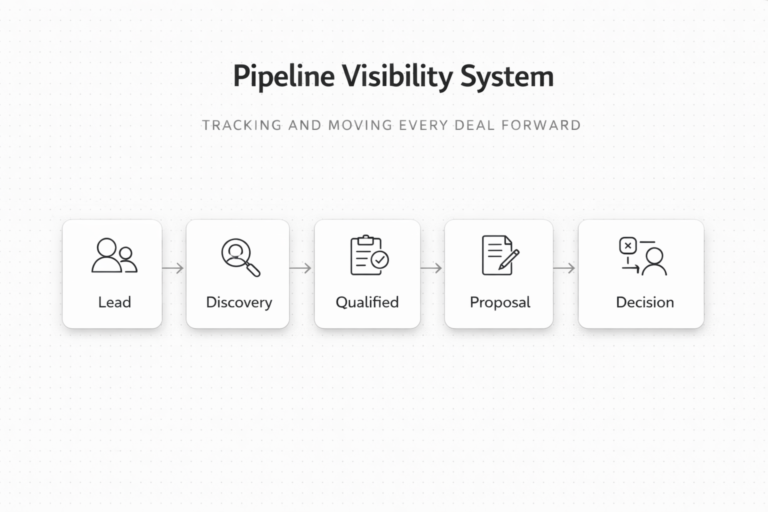
This is closely related to how pipeline stages should be defined and managed:
The Real Role of a Discovery Call
A discovery call is not about gathering information.
It is about qualifying the opportunity.
This is the point where a lead becomes:
a structured, evaluated deal
Without this step, the pipeline fills with uncertainty.
And that uncertainty shows up later as:
- unclear proposals
- delayed decisions
- inconsistent conversion
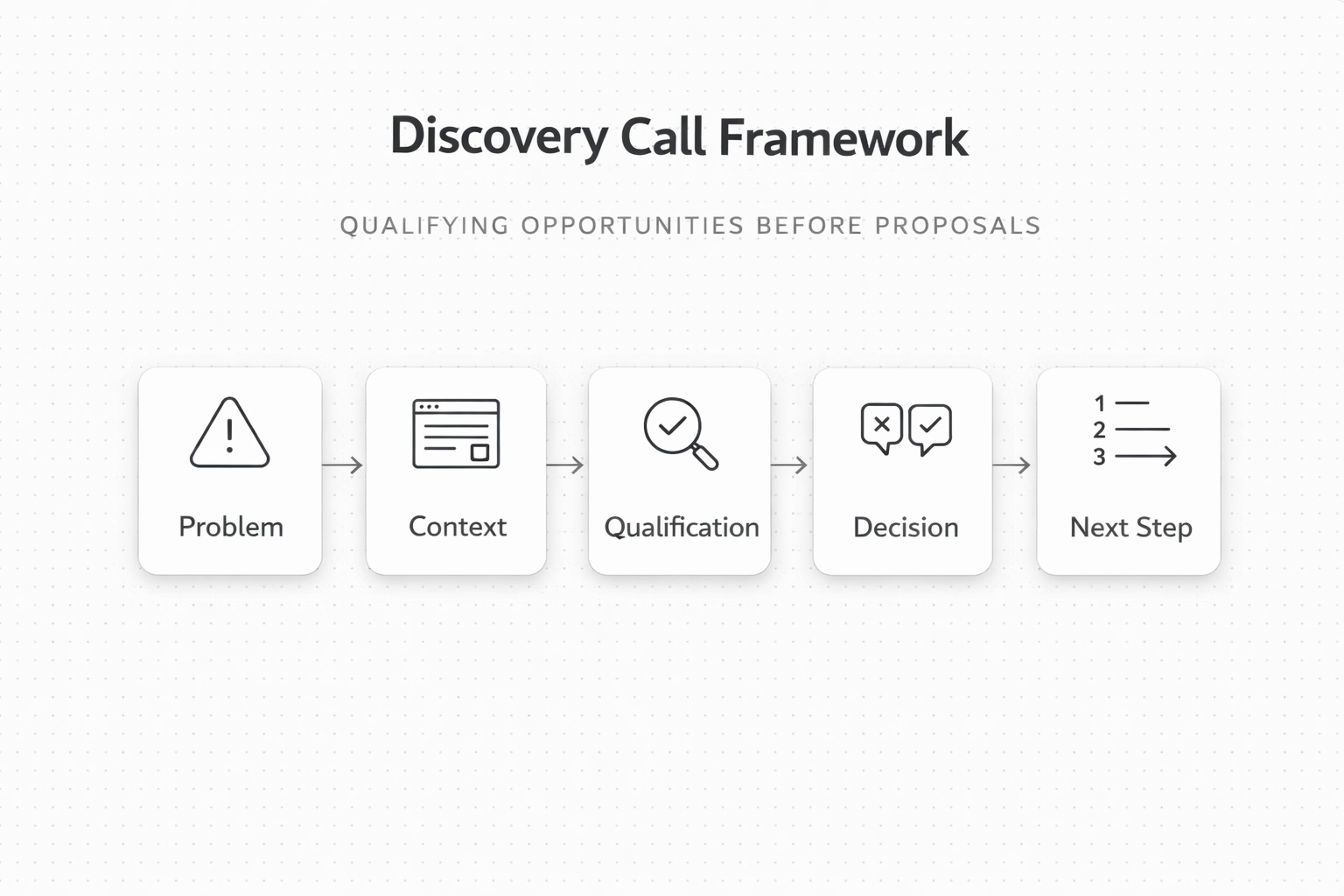
The Discovery Call Framework
A structured discovery call consists of four key components.
1. Problem Definition
The client must clearly articulate:
- what they are trying to solve
- why it matters
- what is currently not working
If the problem is vague, the opportunity is weak.
2. Context and Constraints
Understanding context is critical:
- timeline
- internal resources
- dependencies
- limitations
This defines feasibility.
3. Decision Structure
You need clarity on:
- who is involved
- how decisions are made
- what approval looks like
Without this, deals become unpredictable.
4. Qualification
Not every opportunity should move forward.
This is where discovery connects directly to qualification:
A discovery call should filter.
Not just explore.
Common Discovery Call Mistakes
Talking instead of structuring
Trying to impress rather than control the conversation.
Accepting unclear problems
Moving forward without validation.
Treating every lead as viable
Skipping qualification entirely.
Ending without a defined outcome
Leaving the next step ambiguous.
How Discovery Calls Impact Proposal Conversion
Discovery calls directly influence proposal success.
If discovery is weak:
- proposals become unclear
- pricing feels arbitrary
- clients hesitate
If discovery is strong:
- proposals become simpler
- decisions become faster
- conversion increases
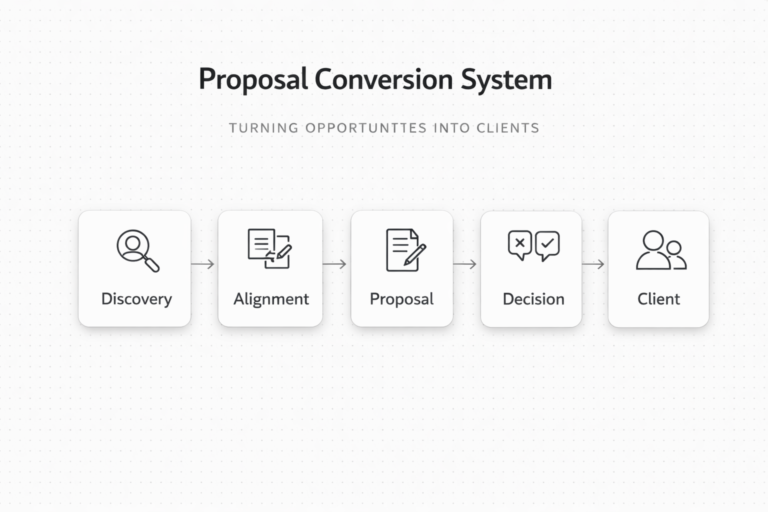
This is further explored in how proposal conversion works:
Practical Structure for Discovery Calls
A simple structure you can follow:
- Define the problem
- Explore context
- Validate fit
- Confirm next step
Each step should lead to clarity.
If it doesn’t:
the call is incomplete
When NOT to Move Forward
A strong discovery call also disqualifies.
Do not proceed if:
- the problem is unclear
- no decision-maker is involved
- expectations are unrealistic
- budget is misaligned
Moving forward anyway creates friction later.
Operationalizing Discovery Calls
To make discovery calls effective, consistency is key.
Freelancers should:
- use a repeatable framework
- capture structured notes
- assign pipeline stages immediately
- define clear next actions
This connects to how deals are tracked and managed:
How Discovery Fits into the Pipeline
A discovery call is not an isolated event.
It is a structured stage within the pipeline.
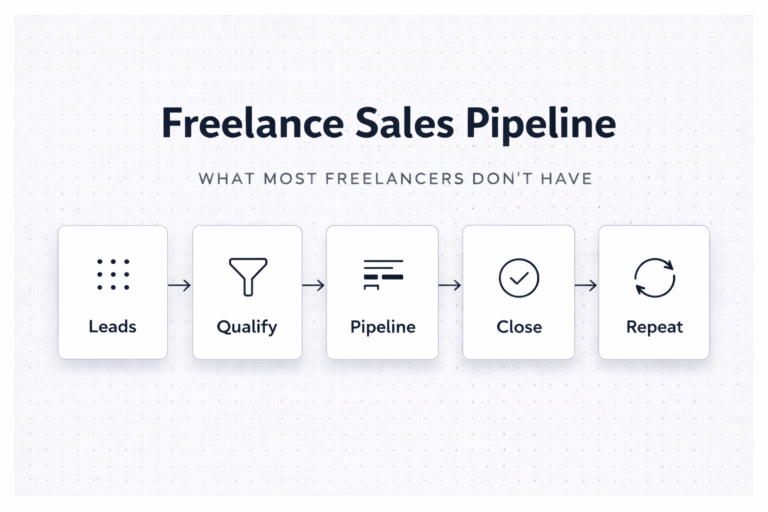
This is part of how the full system operates:
Without structure:
- weak opportunities move forward
- pipeline quality drops
- forecasting becomes unreliable
Conclusion
Discovery calls are not about understanding the client.
They are about controlling the pipeline.
They determine:
- what moves forward
- what stops
- what becomes a real opportunity
Without structured discovery, everything that follows becomes unstable.