Intro
Most freelancers think their problem is not getting enough clients.
It’s not.
The real issue is that too many opportunities enter the pipeline without any structure to evaluate them.
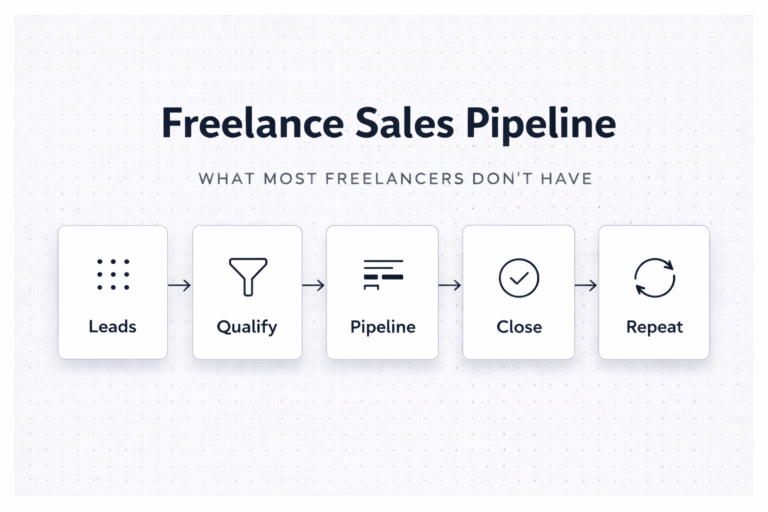
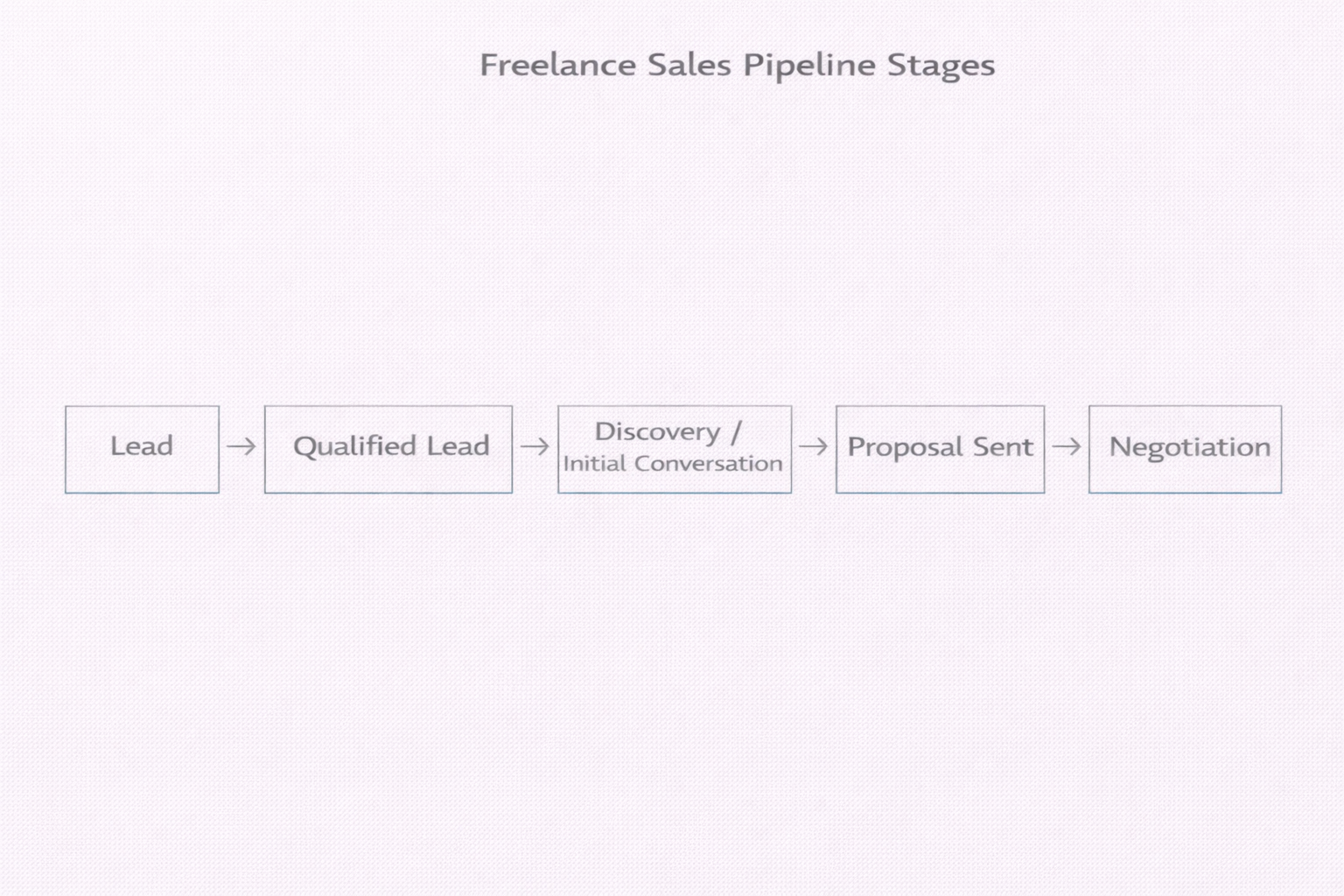
This is explored further in how a structured client pipeline actually works.
So everything looks like potential work.
But very little actually converts.
Without a clear client qualification process, your pipeline fills up with:
- unqualified leads
- unclear projects
- clients who never decide
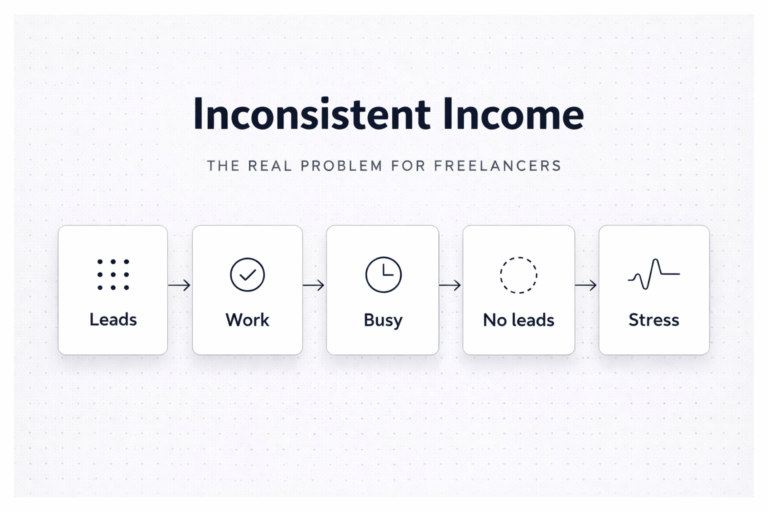
And over time, this leads to the same outcome:
a full pipeline that produces inconsistent income
Why Most Freelancers Struggle with Client Qualification
Freelancers often assume that more leads will solve their revenue problem.
But when every opportunity is treated the same, the pipeline becomes noisy and inefficient.
This is a common pattern in how freelancers approach client acquisition.
Common issues include:
- no clear criteria for what makes a “good client”
- accepting conversations without evaluating fit
- spending time on opportunities that never close
This creates hidden friction inside the pipeline.
Instead of progressing deals forward, freelancers get stuck managing uncertainty.
What a Client Qualification Framework Actually Is
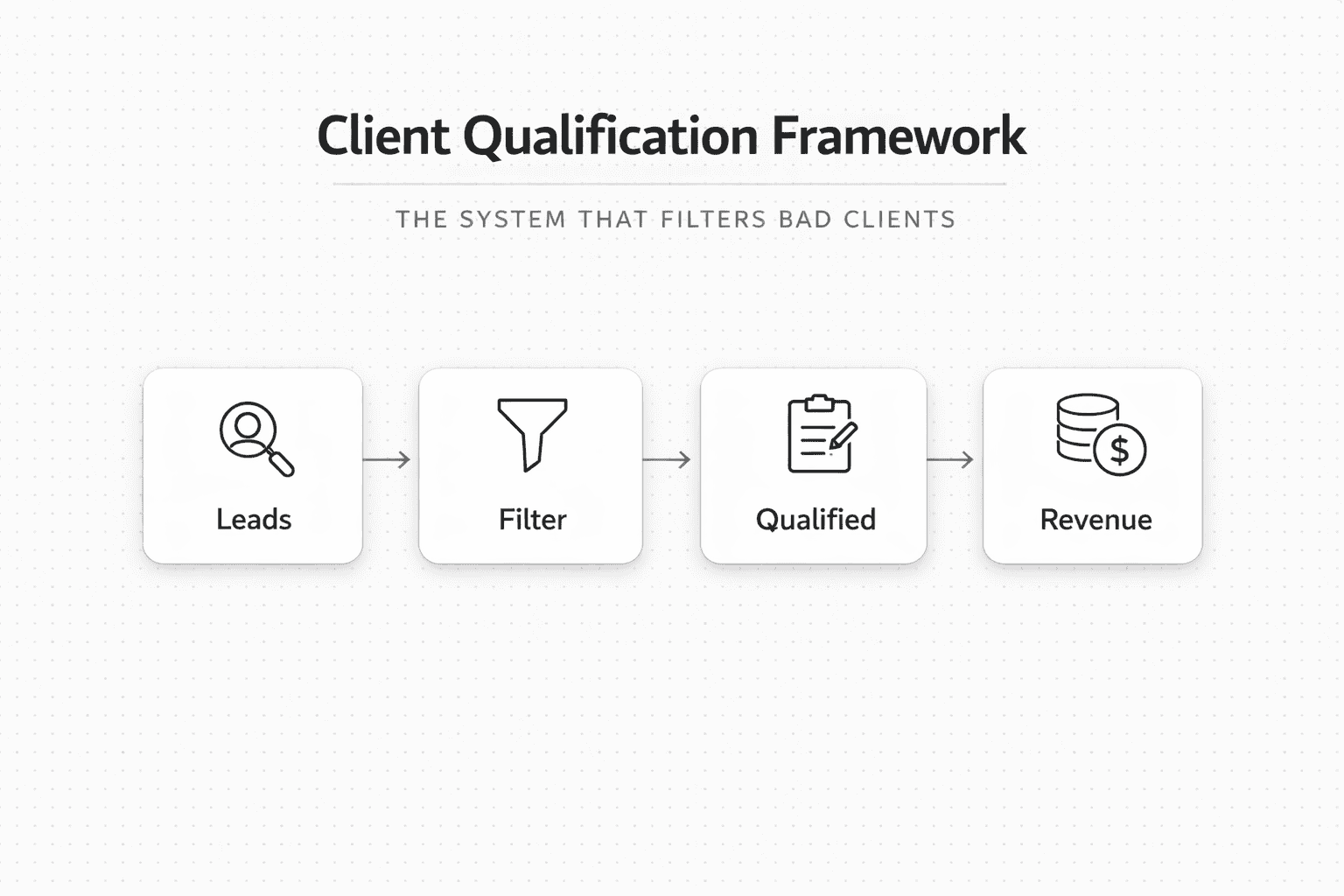
A client qualification framework is a structured way to evaluate every opportunity before committing time and effort.
It ensures that each lead is assessed against clear criteria.
Not based on intuition.
Not based on urgency.
But based on fit.
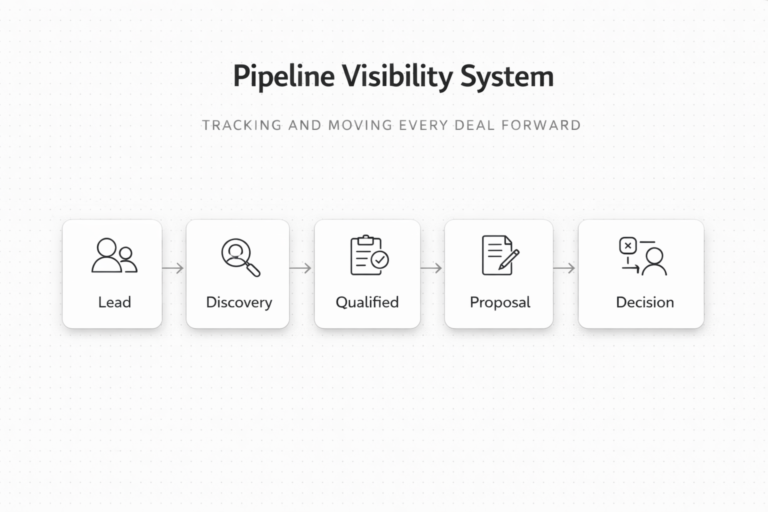
This connects directly to how pipeline stages should be defined and managed:
A strong qualification system answers:
- Is this project financially viable?
- Is there a clear problem to solve?
- Is the right person involved in the decision?
- Does this fit my positioning?
- Can I realistically deliver this within my capacity?
Without these filters, your pipeline becomes reactive instead of controlled.
The 5 Core Dimensions of Client Qualification
1. Budget Viability
Does the client have a realistic budget for the scope of work?
Important signals:
- budget is approved, not hypothetical
- aligns with the effort required
- meets your minimum engagement threshold
This is closely related to how freelancers track profitability and pricing:
Without financial alignment, deals often stall or require unnecessary negotiation.
2. Problem Clarity
Is the problem clearly defined?
If the client cannot articulate:
- what they need
- why it matters
- what success looks like
then the project will likely expand or lose direction.
3. Decision Authority
Are you speaking to someone who can actually approve the work?
If not, expect:
- delays
- repeated explanations
- unpredictable outcomes
Clear decision authority is critical for pipeline momentum.
4. Scope Alignment
Does the project fit your expertise and positioning?
Taking on misaligned work leads to:
- lower quality outcomes
- reduced efficiency
- weaker long-term positioning
5. Timeline Feasibility
Can the project realistically be delivered within the expected timeframe?
This is strongly connected to how freelancers manage workload and capacity:
Consider:
- current workload
- existing commitments
- delivery constraints
Overcommitting leads to pipeline bottlenecks later.
How to Apply Client Qualification in Practice
A framework only becomes valuable when it is consistently applied.
In practice, client qualification should happen at three key points:
1. Before the first call
Use intake forms or initial questions to filter out low-quality leads early.
This prevents unnecessary calls and saves time.
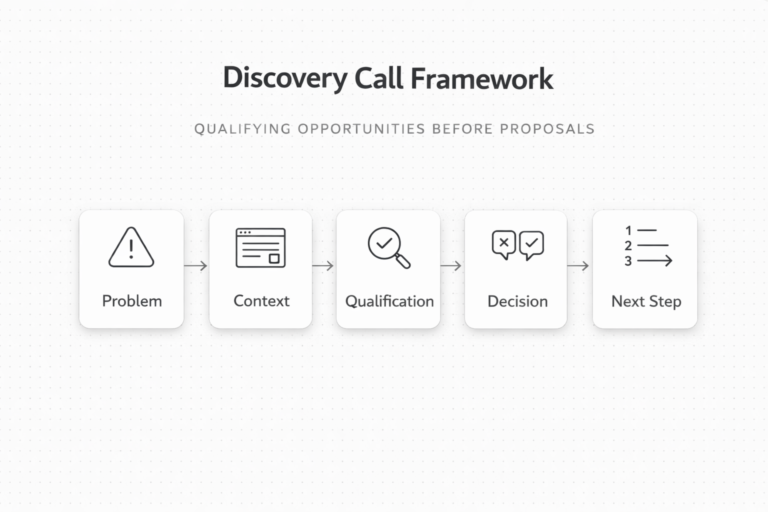
2. During the discovery call
Use the framework actively:
- clarify the problem
- validate budget expectations
- confirm decision authority
This ensures that every conversation moves toward a clear outcome.
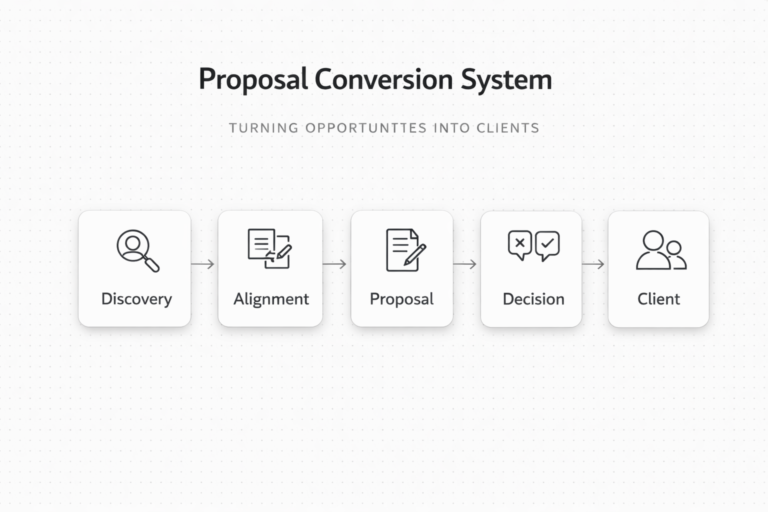
3. Before sending a proposal
If a lead does not meet qualification criteria, a proposal should not be sent.
Sending proposals to unqualified leads is one of the main reasons freelancers experience low conversion rates.
This is further explained in how proposals should be structured and positioned:
Applying qualification consistently turns your pipeline from reactive to controlled.
What Happens Without Qualification
When qualification is missing, the pipeline breaks in predictable ways:
- leads enter but never progress
- follow-ups become inconsistent
- deals remain “open” without movement
- forecasting becomes unreliable
This is often visible in how pipeline velocity declines over time:
It creates the illusion of activity without actual progress.
How This Connects to the Client Pipeline System
Client qualification is not a standalone activity.
It is the entry point of a structured pipeline.
A broader explanation of this system can be found here:
Client Pipeline System
Without it:
- every stage becomes unclear
- prioritization becomes impossible
- conversion rates drop
A strong pipeline starts with strong filtering.
Conclusion
Most freelancers don’t struggle because they lack opportunities.
They struggle because they don’t control which opportunities enter their pipeline.
Client qualification changes that.
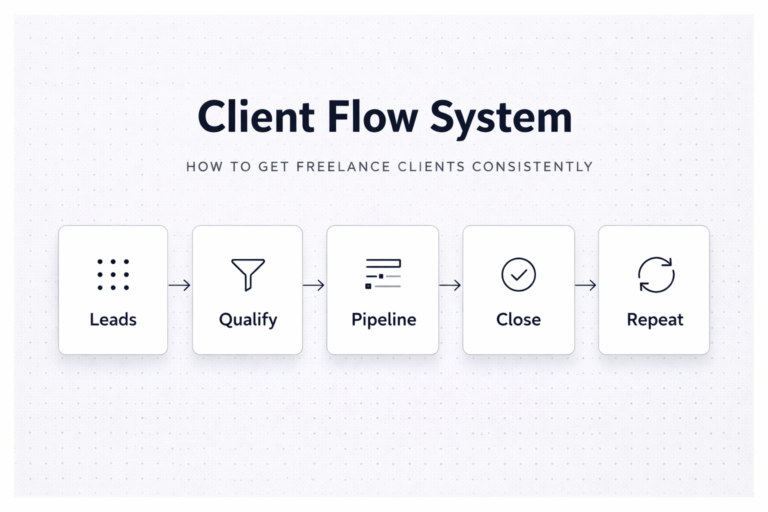
It turns a list of leads into a structured system.
And that is where consistent client flow begins.