Most freelancers don’t have a client problem.
They have a pipeline problem.
Opportunities exist. Conversations happen. Projects get closed.
But there is no structure behind it.
As a result, client acquisition feels unpredictable.
What Is a Freelance Sales Pipeline
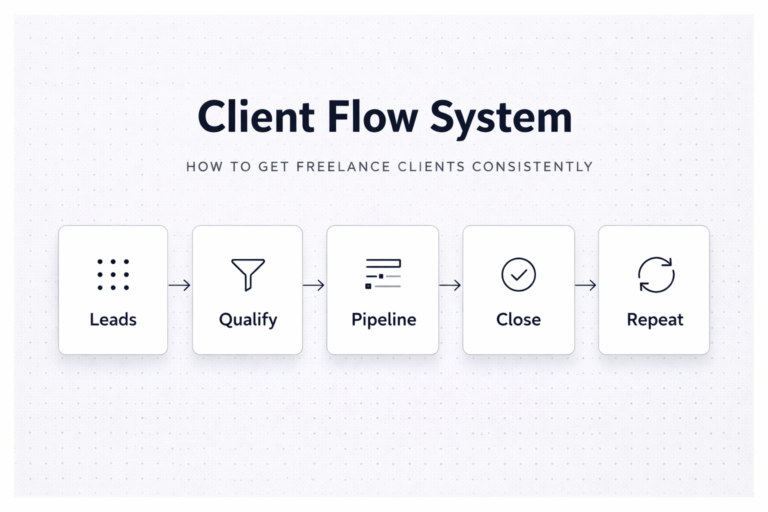
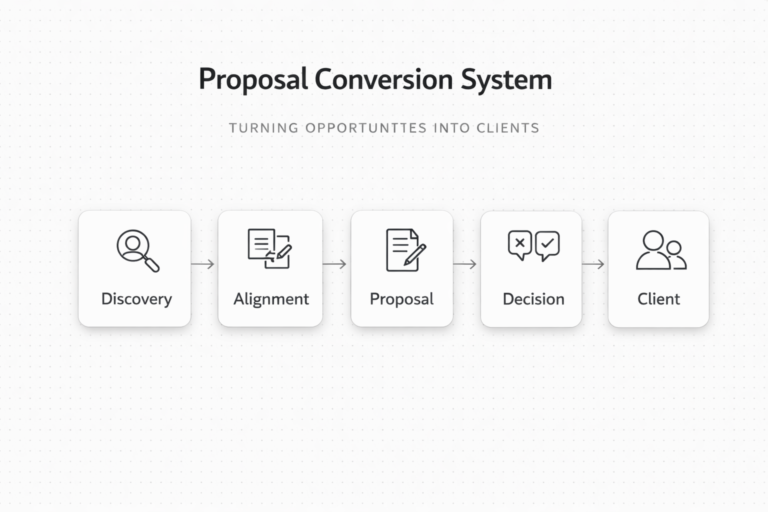
A freelance sales pipeline is a structured system that manages how client opportunities move from first contact to signed work.
Instead of relying on memory, inboxes, or scattered notes, every opportunity is tracked and moved through defined stages.
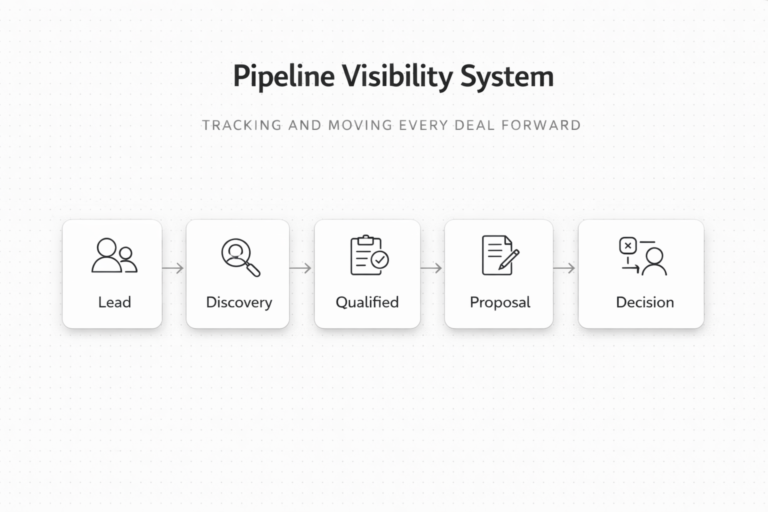
This typically includes:
- initial inquiry
- qualified opportunity
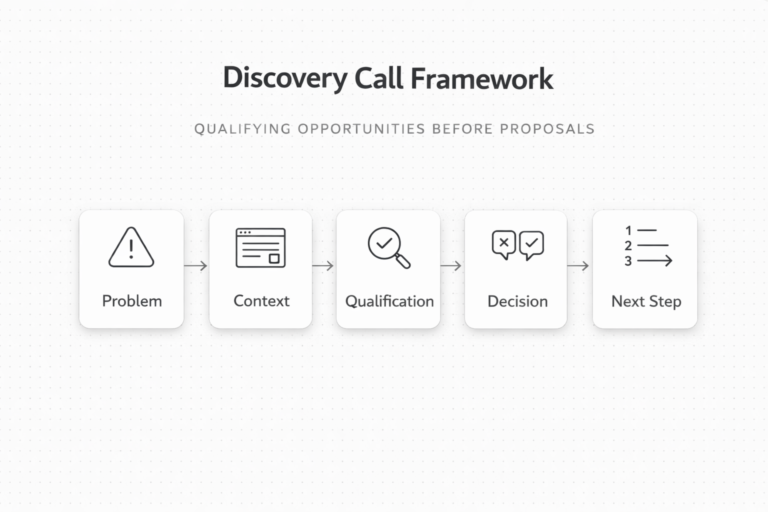
- discovery
- proposal
- negotiation
- closed
Each stage represents progress.
Together, they create visibility into your client acquisition process.
A more detailed breakdown of this structure can be found in sales pipeline stages for freelancers.
Why Most Freelancers Don’t Have One
Most freelancers manage opportunities informally.
Leads live in:
- inbox conversations
- DMs
- notes
- memory
This works in the beginning.
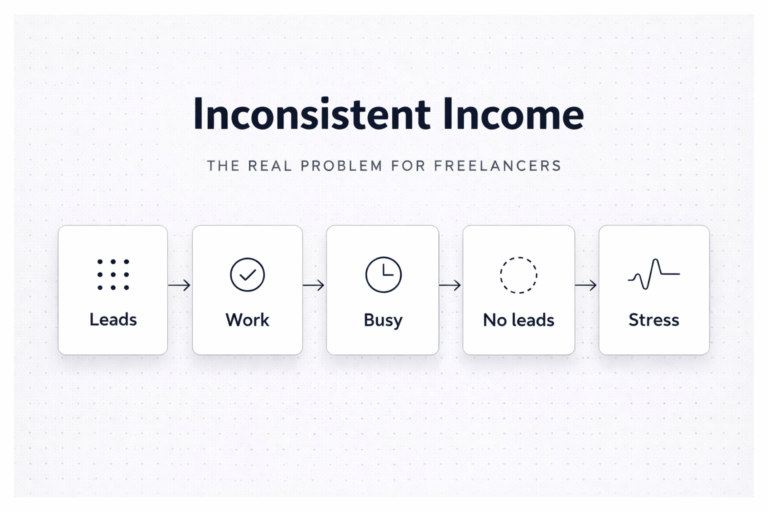
But as activity increases, visibility disappears.
Without a pipeline:
- it’s unclear how many opportunities exist
- follow-ups are missed
- deals stall without noticing
- forecasting becomes guesswork
This is what creates inconsistent client flow.
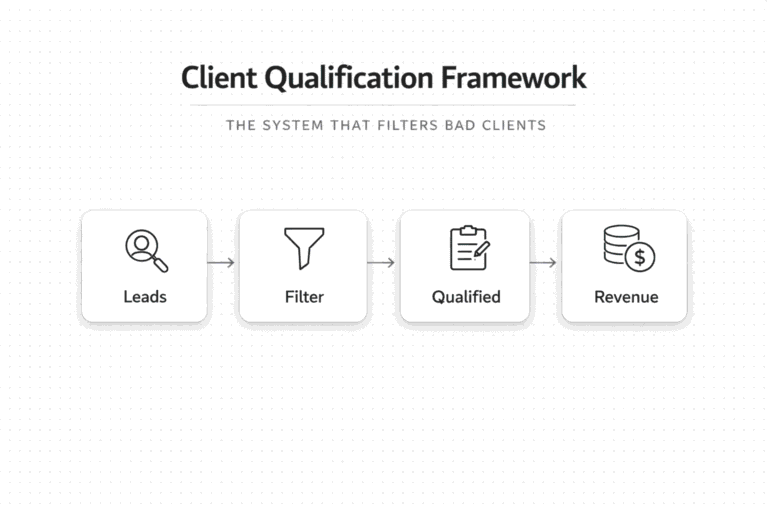
The Difference Between Leads and a Pipeline
Many freelancers believe they have a pipeline because they have leads.
But leads alone are not a pipeline.
A list of contacts is not a system.
A pipeline requires:
- qualification
- defined stages
- clear progression
- active management
Without this, opportunities remain unstructured.
This is why freelancers can generate leads but still struggle to convert them.
This is explored further in how to get freelance clients consistently.
What a Pipeline Actually Solves
A structured pipeline does not just organize leads.
It changes how decisions are made.
With a pipeline, you can see:
- how many opportunities exist
- which ones are likely to close
- where deals are getting stuck
- when new opportunities are needed
This creates control.
Instead of reacting to gaps, you can anticipate them.
This is the foundation of a client pipeline system for freelancers.
A Simple Example
Imagine having five active opportunities.
Without a pipeline, they exist as separate conversations.
It is unclear:
- which are serious
- which require follow-up
- which are unlikely to convert
With a pipeline, each opportunity has:
- a stage
- a probability
- a next action
Even a small number of structured opportunities creates more stability than a large number of untracked leads.
Why Freelancers Stay Reactive
Without structure, freelancers default to reactive behavior.
They focus on:
- urgent conversations
- recent messages
- visible opportunities
Less visible opportunities are often ignored.
This creates gaps in the pipeline.
When those gaps appear, the response is usually:
- more outreach
- lower pricing
- accepting poor-fit clients
Not because freelancers lack skill.
But because they lack visibility.
How to Start Building a Pipeline
A pipeline does not need to be complex.
It needs to be consistent.
Start with:
- one place to track opportunities
- a small number of stages
- a weekly review
Even a simple setup, such as a simple CRM setup for freelancers, is enough to create initial structure.
From there, the system can evolve.
Final Thoughts
A freelance sales pipeline is not a tool.
It is a way of structuring client acquisition.
Without it, opportunities remain fragmented and unpredictable.
With it, freelancers gain visibility into what is happening and what is coming next.
That visibility is what creates consistency.