Client Onboarding System for Freelancers
Introduction
Freelance consulting projects often begin with a signed agreement and an initial kickoff conversation. However, without a structured onboarding process, the transition from sales to delivery can quickly become unclear.
Clients may not fully understand the project structure, communication rhythm, or expectations regarding deliverables. Freelancers may also lack the information required to begin delivery efficiently.
Within the Processome operating model, onboarding belongs to the → Delivery & Operations System, the operational framework responsible for maintaining execution stability once client engagements begin.
A structured onboarding system ensures that every new project begins with clear expectations, aligned communication, and operational readiness.
Without onboarding, projects start with ambiguity.
With onboarding, projects start with structure.
The Core Problem
Many freelance projects begin informally.
After a proposal is accepted, freelancers often move directly into delivery activities without a structured onboarding phase.
Typical project starts may include:
- a quick kickoff call
- an informal exchange of documents
- scattered email instructions
While these interactions may seem sufficient, they often create operational friction later in the project.
Misaligned Expectations
Clients and freelancers may interpret deliverables or timelines differently.
Missing Project Information
Important inputs such as data, access credentials, or stakeholder details may not be provided early.
Unclear Communication Structure
Clients may not know how frequently updates will occur or how feedback should be delivered.
Slow Project Momentum
Projects may start slowly as freelancers gather missing information during execution.
These problems are rarely caused by delivery competence.
They arise from missing onboarding structure.
Concept Explanation
A client onboarding system is the structured process that transitions a client from a signed agreement into an active delivery engagement.
The onboarding system ensures that all operational prerequisites for project execution are established before delivery begins.
This process typically includes:
- confirming project scope and objectives
- collecting necessary inputs and resources
- establishing communication channels
- aligning stakeholders on timelines and expectations
Instead of improvising project initiation, onboarding standardizes the first phase of delivery.
Onboarding also creates continuity between the sales process and operational execution.
This connection links onboarding to frameworks such as:
→ Sales Process for Freelancers Explained
→ Discovery Calls for Freelancers
Information gathered during the sales phase becomes the operational foundation for project delivery.
Client Onboarding System Framework
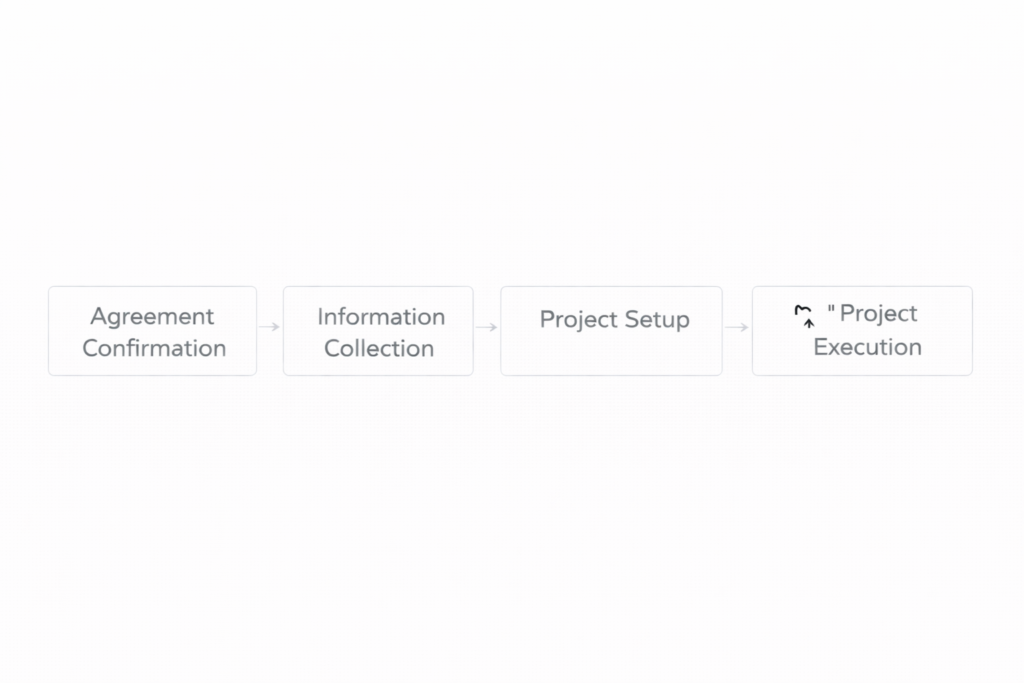
A structured onboarding system typically includes four operational stages.
1. Agreement Confirmation
The onboarding process begins by confirming the project agreement.
This step ensures that both parties share a clear understanding of:
- deliverables
- project milestones
- timelines
- communication expectations
Reviewing the agreement prevents misunderstandings before delivery begins.
This stage reinforces scope clarity and supports frameworks such as:
→ Scope Control Framework for Solo Consultants
2. Information Collection
Delivery cannot begin effectively without the required project inputs.
Onboarding should therefore include a structured process for gathering:
- project data and documentation
- access credentials and technical resources
- relevant background information
- stakeholder contact details
Collecting this information early prevents delays during execution.
3. Project Setup
Once required information is collected, the project environment must be prepared.
Project setup may include:
- establishing project documentation
- creating task structures or milestones
- setting up collaboration tools or shared workspaces
This stage transforms the project from a conceptual agreement into an operational delivery environment.
4. Kickoff Alignment
The onboarding process concludes with a structured kickoff meeting.
The kickoff aligns all stakeholders on:
- project objectives
- delivery milestones
- communication cadence
- decision-making processes
This meeting ensures that both consultant and client begin the project with shared expectations.
Clear kickoff alignment significantly improves delivery momentum.
Operational Impact
A structured onboarding system improves several operational aspects of freelance consulting engagements.
Faster Project Start
Projects begin with the necessary information and resources already in place.
Reduced Miscommunication
Clear expectations minimize misunderstandings during delivery.
Stronger Client Confidence
Professional onboarding signals structured project management.
Improved Delivery Efficiency
Freelancers spend less time clarifying basic project details during execution.
Onboarding therefore improves both operational efficiency and client experience.
System-Level Impact Across Processome
Client onboarding influences coordination across the Processome operating architecture.
Client Pipeline System → opportunity qualification transitions smoothly into delivery
Capacity Planning System → project timelines align with available delivery capacity
Profit Tracking System → margin visibility improves through structured project setup
Delivery & Operations System → execution stability through structured project initiation
Effective onboarding ensures that new client engagements integrate smoothly into operational workflows.
Common Failure Patterns
Freelancers often underestimate the importance of onboarding because the process appears straightforward.
Several failure patterns frequently occur.
Skipping Formal Onboarding
Freelancers move directly into delivery after contract signature.
Incomplete Information Collection
Important project inputs are gathered gradually during execution.
Unstructured Kickoff Meetings
Kickoff conversations occur without a clear agenda or defined objectives.
Missing Stakeholder Alignment
Additional stakeholders may join later without understanding the original project scope.
These patterns introduce unnecessary friction into project delivery.
Strategic Outcome
When a structured onboarding system is implemented, project execution becomes significantly more predictable.
Instead of beginning projects through informal coordination, freelancers establish clear operational foundations before delivery begins.
This produces several advantages.
Stronger delivery momentum
Projects begin with the required information and alignment.
Improved operational clarity
Clients understand how the project will progress.
Reduced delivery risk
Potential misunderstandings are resolved early.
More professional client experience
Structured onboarding strengthens client confidence in the consulting process.
Over time, onboarding becomes a standard operational step rather than an improvised conversation.
Final Perspective
Freelancers often focus heavily on client acquisition while treating project initiation as an informal step.
However, the beginning of a project strongly influences the quality of its execution.
Within the Processome operating model, the → Delivery & Operations System ensures that client engagements begin with clear operational foundations.
Client acquisition creates opportunity.
Structured onboarding prepares that opportunity for successful delivery.