Project Planning for Freelancers
Introduction
Freelance consulting projects often begin with clear objectives but unclear execution structures. Without structured project planning, delivery can become reactive, deadlines may shift unexpectedly, and workloads can become difficult to manage.
Planning transforms consulting engagements from loosely defined tasks into structured delivery sequences.
Within the Processome operating model, project planning belongs to the → Delivery & Operations System, the operational framework responsible for ensuring that consulting engagements progress through defined execution stages.
Project planning translates project objectives into operational structure.
Instead of reacting to work as it appears, freelancers define how the project will progress before execution begins.
Structured planning improves delivery stability, client alignment, and workload predictability.
The Core Problem
Many freelancers move directly from proposal acceptance into project execution.
Once a project begins, tasks are often organized informally through:
- email discussions
- task lists
- reactive prioritization
While this approach may work for small engagements, it introduces several operational risks as project complexity increases.
Unclear Project Structure
Without defined phases or milestones, work may progress unevenly.
Timeline Instability
Deadlines become difficult to manage when deliverables are not linked to structured milestones.
Client Feedback Delays
Without defined review points, feedback may arrive too late in the project.
Capacity Disruption
Unplanned work may interfere with other active client engagements.
These challenges rarely originate from workload alone.
They often reflect the absence of structured planning.
Concept Explanation
Project planning is the process of translating project objectives into an operational delivery structure.
Instead of managing tasks reactively, freelancers define how the project will progress across a series of planned phases.
A structured project plan typically includes:
- project objectives and deliverables
- milestones and delivery phases
- review and feedback points
- timeline expectations
Planning therefore creates visibility into how consulting work will evolve from project initiation to final delivery.
Project planning also supports other operational frameworks, including:
→ Project Kickoff Framework for Consultants
→ Delivery Workflow Systems
The kickoff meeting establishes alignment, while the project plan defines the operational path for execution.
Project Planning Framework
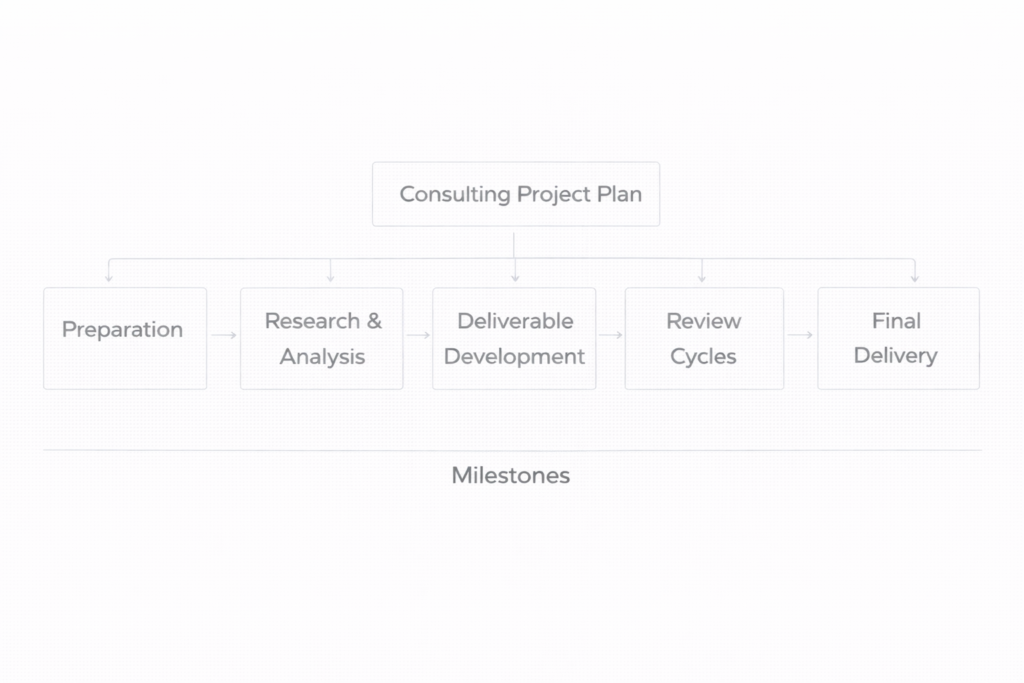
A structured project planning framework typically includes five operational components.
1. Project Objectives
Planning begins with clarifying the purpose of the engagement.
Objectives should define:
- the business problem being addressed
- expected outcomes of the project
- success criteria for the engagement
Clear objectives ensure that all project activities remain aligned with the intended outcome.
2. Deliverable Definition
Once objectives are defined, deliverables must be specified.
Deliverable planning includes:
- deliverable formats
- content expectations
- milestone outputs
Clear deliverable definitions reduce ambiguity during execution.
This concept connects closely with:
→ Scope Control Framework for Solo Consultants
3. Milestone Structure
Projects should be divided into milestone phases that structure delivery progress.
Milestones typically represent:
- major project stages
- key deliverables
- review checkpoints
Milestone structures improve project visibility and create natural opportunities for client feedback.
4. Timeline Planning
Once milestones are defined, timelines can be established.
Timeline planning considers:
- expected duration of each phase
- client feedback cycles
- dependencies between deliverables
Structured timelines improve workload planning and reduce delivery delays.
5. Review and Feedback Points
Planning must also incorporate structured review sessions.
Review points allow clients to:
- evaluate project progress
- provide feedback
- confirm alignment with expectations
Early feedback prevents misunderstandings from accumulating during delivery.
Operational Impact
Structured project planning improves several operational aspects of freelance consulting businesses.
Improved Delivery Predictability
Defined milestones provide visibility into project progress.
Stronger Client Alignment
Structured planning ensures that clients understand how work will progress.
Reduced Delivery Risk
Clear plans reduce the likelihood of unexpected delays.
Better Workload Management
Freelancers can align project phases with available delivery capacity.
Project planning therefore improves both execution efficiency and operational stability.
System-Level Impact Across Processome
Project planning supports coordination across the Processome operating architecture.
Client Pipeline System → qualified opportunities transition into structured delivery plans
Capacity Planning System → project timelines align with available delivery capacity
Profit Tracking System → margin visibility improves through structured delivery effort
Delivery & Operations System → execution stability through defined project phases
Planning ensures that consulting engagements move from proposal to delivery through structured operational processes.
Common Failure Patterns
Freelancers often encounter delivery instability because project planning is incomplete or informal.
Several patterns frequently appear.
Skipping Formal Planning
Projects begin immediately after kickoff without defined milestones.
Vague Deliverables
Deliverables remain loosely defined, creating ambiguity during execution.
Missing Review Points
Clients review deliverables only at the end of the project.
Reactive Scheduling
Freelancers adjust timelines repeatedly as work progresses.
These behaviors gradually reduce delivery predictability.
Strategic Outcome
When structured project planning frameworks are implemented, freelance consulting engagements become significantly more manageable.
Instead of progressing through improvised task coordination, projects follow clearly defined operational paths.
This produces several advantages.
Predictable project progress
Milestones create visible stages of delivery.
Improved client collaboration
Review cycles maintain alignment throughout the engagement.
Reduced delivery friction
Structured planning prevents misunderstandings.
Stronger operational discipline
Freelancers maintain control over project execution.
Project planning transforms consulting engagements from loosely organized tasks into structured operational workflows.
Final Perspective
Freelancers often focus heavily on acquiring projects while leaving delivery structure undefined.
However, the success of consulting engagements depends largely on how effectively projects are planned.
Within the Processome operating model, the → Delivery & Operations System ensures that consulting work progresses through defined operational structures.
Planning converts objectives into execution.
Clear plans produce stable delivery.