You can have:
- a steady flow of leads
- qualified opportunities
- consistent conversations
And still close nothing.
Not because the demand isn’t there.
But because something breaks between the conversation and the commitment.
This is where most proposals fail.
Not in how they are written.
But in how they are positioned within the pipeline.
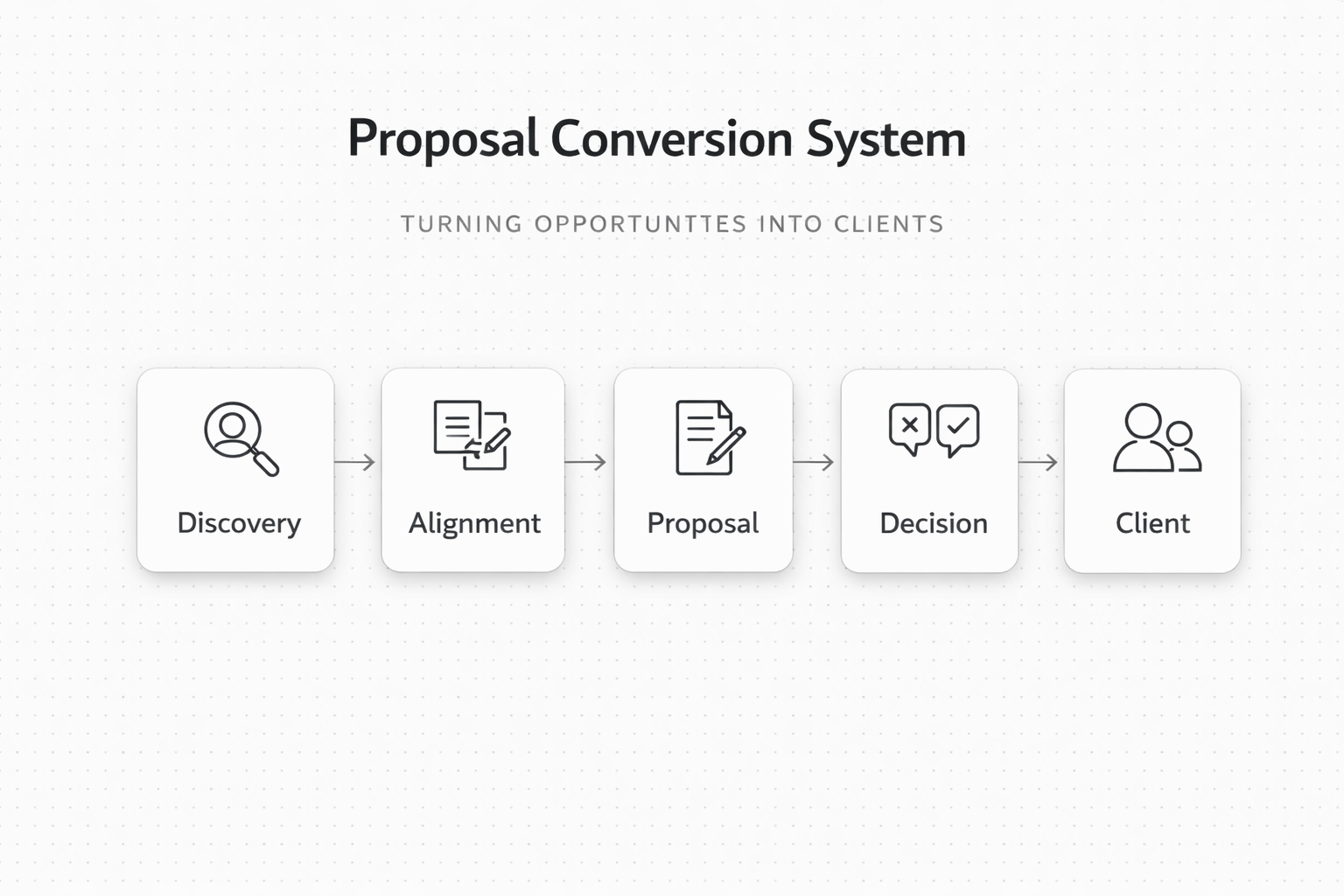
A proposal is not a document.
It is a transition.
And when that transition is not structured, conversion becomes unpredictable.
Why Proposal Conversion Breaks Down
A proposal is often treated as the final step in the sales process.
In reality, it is one of the most sensitive points in the pipeline.
At this stage:
- expectations must be aligned
- the problem must be clear
- the decision-maker must be involved
If any of these elements are missing, the proposal does not move the deal forward.
It slows it down.
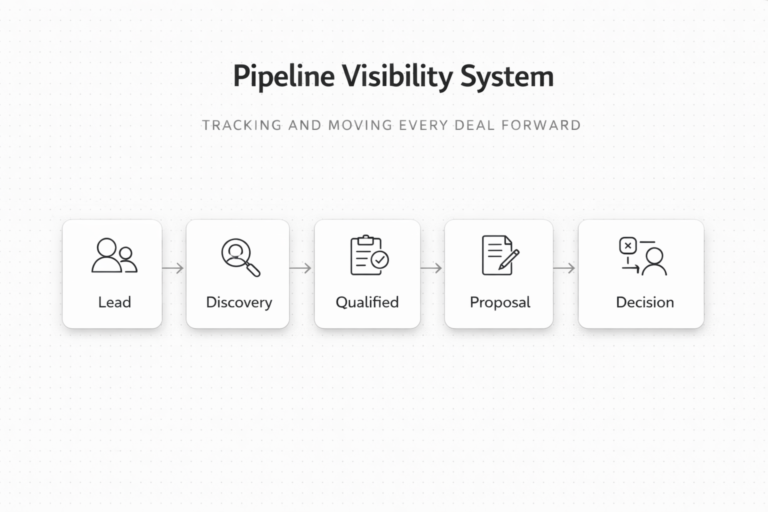
This is closely related to how pipeline stages should be defined and managed:
Without a clear structure, proposals become a point of friction instead of progression.
The Real Problem: Proposals Are Used to Create Clarity
Many freelancers rely on the proposal to explain everything.
They use it to:
- define the problem
- outline the scope
- justify the price
But by the time a proposal is sent, these elements should already be clear.
If they are not:
the proposal becomes a negotiation document instead of a decision document
And that is where conversion drops.
What a High-Converting Proposal Actually Does
A strong proposal does not introduce new information.
It confirms what has already been established.
1. It reflects the problem clearly
The client should recognize their own situation immediately.
2. It defines the outcome
Not in terms of tasks.
But in terms of change:
- what improves
- what is solved
- what is different
3. It structures the decision
A proposal should make it obvious:
- what happens next
- how to proceed
- what commitment looks like
Without this, clients delay.
Not because they are not interested.
But because they are uncertain.
Common Proposal Mistakes
Over-explaining the work
Detailed breakdowns often create more questions than answers.
Focusing on deliverables instead of outcomes
Clients do not buy tasks.
They buy results.
Sending proposals too early
Before qualification is complete.
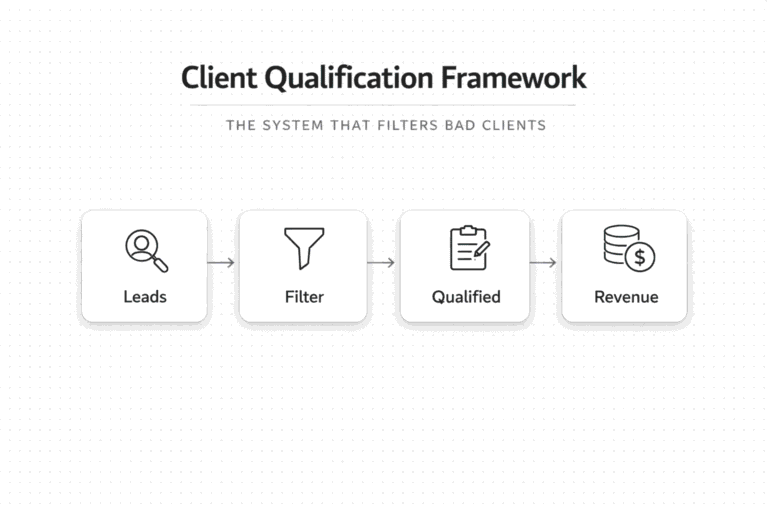
This is explained in how client qualification should be structured:
No defined next step
Leaving the client without direction increases friction.
Treating proposals as documentation
Instead of a conversion mechanism.
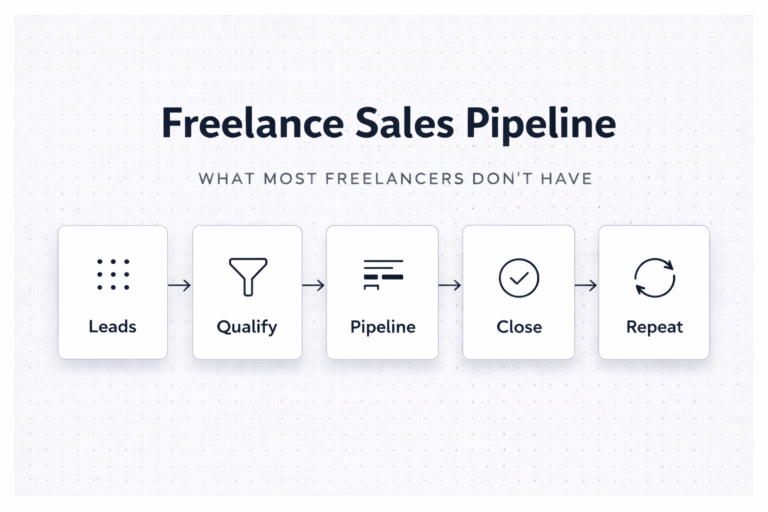
How Proposals Fit into the Pipeline
A proposal is not a standalone artifact.
It is a stage within a structured pipeline.
This is part of how a full client pipeline operates:
Without this structure:
- proposals are inconsistent
- conversion rates fluctuate
- forecasting becomes unreliable
A structured pipeline ensures that:
- only qualified opportunities reach the proposal stage
- each proposal has a clear purpose
- decisions happen faster
Practical Application: When to Send a Proposal
A proposal should only be sent when four conditions are met:
1. The problem is clearly defined
2. The decision-maker is involved
3. The scope is aligned
4. The budget is realistic
If any of these are missing:
the proposal should be delayed
This is not about being cautious.
It is about maintaining pipeline quality.
How to Improve Proposal Conversion (Systematically)
Improving conversion is not about writing better documents.
It is about controlling the steps before the proposal.
This includes:
- stronger qualification
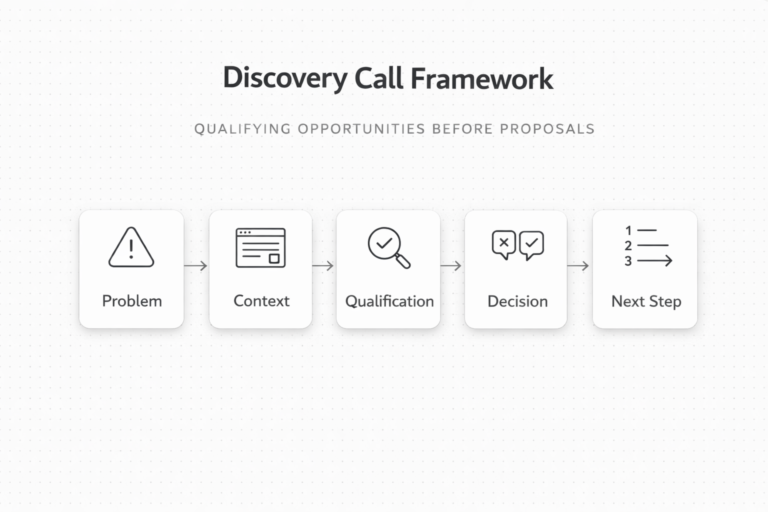
- clearer discovery conversations
- defined pipeline stages
When these elements are structured, proposals become predictable.
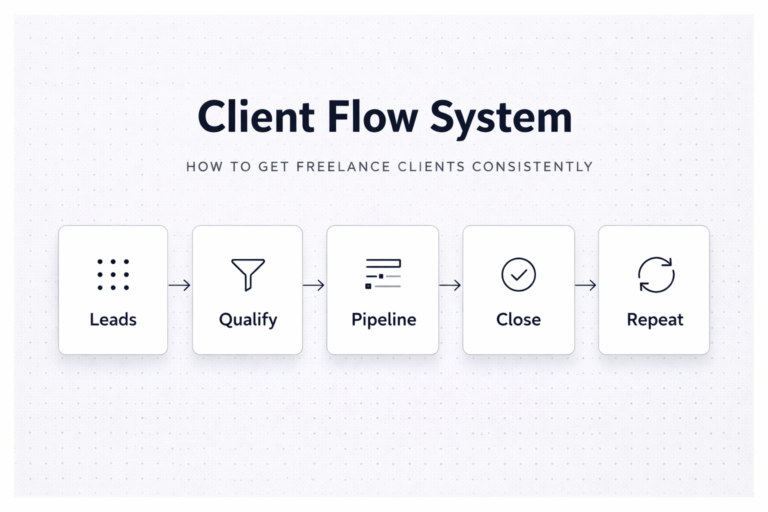
This also affects how pipeline velocity develops over time:
Conclusion
Proposal conversion is not a writing problem.
It is a system problem.
A proposal does not fix a weak pipeline.
It reveals it.
When the pipeline is structured:
- proposals become simpler
- decisions become faster
- conversion becomes consistent
And that is where predictable client acquisition begins.